Friday, August 27, 2010

Week #50 Honduran

Having traveled to Honduras a few years ago, my friend Carolyn was eager to revisit its cuisine and relive her adventures in Central America. So I got together with her to sample some Honduran specialties at El Katracho in Sherman Oaks. She got a kick out of combing over the menu and recalling where she'd gone there and which foods were familiar to her.

Unordered but welcomed as a starter while we awaited our meal was a basket of catrachitas (oops! didn't get a photo), thick corn tortilla chips drizzled with a house made salsa and sprinkled with a bit of fresh queso. This is not your everyday chips and salsa--these chips are denser, and this salsa richer than what I've had before. We savored them rather than shoveling them in, as so often happens when you have a bottomless chip basket set before you in most places.
Carolyn ordered the El Katracho, the restaurant's self-named platter of three treats, all of which were served on dense corn tortillas, corn being a staple food of the Mayan culture that is this country's heritage (left to right): a taco frito, a tortilla filled with chicken, rolled and deep fried; a tortilla topped with beans (a combination of hunger and communication breakdown resulted in my not catching the name of this one); and an enchilada, loaded with layers of seasoned ground pork and chopped fresh vegetables and topped with a slice each of tomato and boiled egg. It's a little difficult in this photo to figure out where one item stops on the plate and the next one begins. Oh well, it was all a lovely, tasty mess. Finger licking IS required!
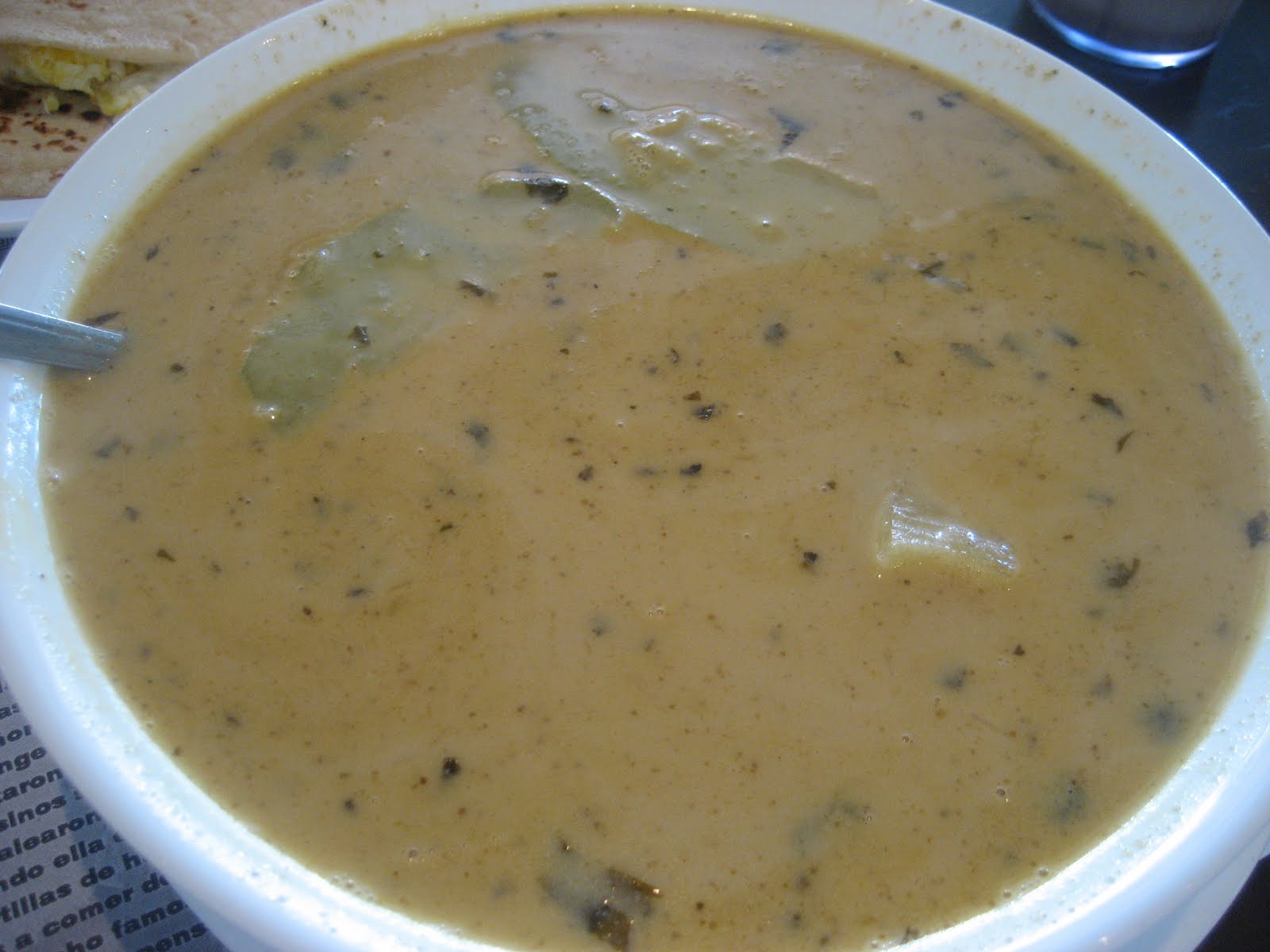
I got a big bowl of sopa de caracol--conch soup, one of the country's most popular dishes. In addition to delicate bits of conch--that's the meat from the critter that lives inside those lovely curved seashells you put up to your ear to try to hear the ocean--this rich soup made of conch broth and coconut milk is loaded with slices of chayote--those are the green pieces at the top of the bowl that look a bit like slices of apple; golden planks of cassava; and rounds of green plantain called guineo verde. All three of those vegetables are super-dense and rich, which means that yes, a seafood soup can fill you up, especially when it contains a generous measure of coconut milk, a staple of Honduran cooking. The green flecks floating in it are cilantro leaves. (Himself and I made a meal of this soup that night--I'd only managed a few sips of it before I gave up and asked for to-go containers.)

I also got a baleada, a soft, fluffy flour tortilla that can come filled with just about anything you can imagine. Mine was smeared with fried beans, homemade salsa and crema and filled with fried egg, avocado slices and a crumbling of fresh cheese. Baleadas are near and dear to the hearts of all Hondurans, and for good reason. The delicate texture of the tortilla and the ease with which all its tasty components come together in wonderfully smooth bites make this favorite practically drinkable! Next time I'm ordering a table full of them.

Barena is a Honduran beer that for all the world looks like champagne. It is a really pale gold, and while you can't tell from this photo, it's loaded with super-fine bubbles that look like those in sparkling wine. It's incredibly effervescent and really refreshing--great for helping deal with the overload of rich food.

As often happens, we were too stuffed to order dessert, so at home later, I tried making a super-simple Honduran sweet.
While I prefer mango raw and unadorned, for the sake of this blog entry I tried preparing it the Honduran way--thinly sliced, dusted with cinnamon, sprinkled with sugar, dotted with a bit of butter and baked at 400°F until lightly browned. I pulled it out of the oven at 20 minutes, because the edges were beginning to brown, and I didn't want it turning into fruit leather. This is a good way to use mangoes that aren't at peak season and therefore aren't as sweet as you'd like. But next time I'll follow through with the coconut milk theme and drizzle that, instead of heavy cream, over the baked fruit.

I figured the restaurant's name must have a story behind it, so I looked up "katracho," and boy, does it ever: A "catracho" is a Honduran. The expression comes from Nicaraguans mispronouncing the name of Honduran General Xatruch, who in the 1850s beat back the attempts of a North American adventurer bent on colonizing Central America and turning it into a collection of slave states. His defeat was and continues to be a huge source of pride for Honduras. Well done, amigos!

Tuesday, August 24, 2010

Week #49 Polish

Lately Himself has been trying to eat less meat, which is nigh impossible, seeing as how he's my #1 date on these dining adventures. It's not too difficult if we're eating Asian, but Polish food is particularly heavy on meat of all kinds. As we made our way to Polka in Glendale, I wondered if the meat-and-cabbage stereotype was just that, or if there was more to this cuisine.

As expected, there was plenty of meat and cabbage on the menu. But Himself found a vegetarian plate that included pierogis, large flour dumplings filled with mashed potatoes and cheese and palushki, little white football-shaped noodles made of potato and flour. They reminded me a bit of really large spaetzle, but without the egg. There was also a generous serving of sautéed mushrooms, which provide a nice meatiness and heft to the meal. He didn't come away hungry from this meatless plate--but I'll confess, since he might not, that he did pinch a couple of bites of my beef.

I went for a trio of Polish standards, gulasz, slow-cooked beef; golabki, cabbage roll stuffed with ground beef and onion; and the same pierogis filled with potatoes and cheese. My plate included a couple of those little creamy smooth palushkis, too. Rounded out with vegetables and a bowl of tomato soup, this was a meal best eaten in preparation for a full day of work--or a really long nap.

Every time I have cabbage rolls I'm surprised all over again by how much I love them. As a child, I was okay with coleslaw, but I just didn't like cooked cabbage. My aged grand-auntie loved boiled cabbage and tried to instill in me a liking for it, but it was pretty awful stuff. The mere sight of those limp, sickly pale green leaves sent waves of revulsion rippling through me. I was happy to discover as an adult that if you roll up some tasty food inside a cabbage leaf, blanket it in a coating of tasty sauce and cook it, it can be quite, well...tasty! In Poland, cabbage is called "the king of vegetables." Considering its versatility and its ability to get people through a long, cold northern European winter, I'd say the title is well earned. It's a cold-weather-happy vegetable that can be further kept until the next harvest by pickling. That's where sauerkraut comes in.
Back home I made a whopping pot of bigos, a rich, meaty, mushroomy, krauty stew that I'm sure would have been even better if I'd slow cooked it on a cold, winter's day and luxuriated in the heat it provided for the house. Instead I faced August's triple-digit nightmare with the oven turned on. No matter. This was good stuff and worth the extra heat. I used beef, kielbasa and bacon, but from everything I've heard and read, the more types of meat you chuck into it, the better it is. And it's reputed to be its best after several reheatings. This recipe makes a generous batch, so it's easy to put this theory to the test. Himself and I will be eating on it for at least a week.

Bigos is made with sauerkraut, dried mushrooms and whatever meat is available from the hunt. In fact, the Poles call it "hunter stew," because it was carried along for sustenance during the hunt, and they'd chuck into it bits of meat from whatever they'd bagged each day. It's an all-purpose, popular meal that traditionally was made in a large quantity and kept in a wooden barrel. While it is especially popular during Lent and Christmas, it seems everyone eats bigos all the time. In fact, bigos is considered the national dish of Poland.

I'm including a photo of some pierogis from a demo of their production at the Polish Museum of America in Chicago, which has the largest concentration of Poles outside of Poland. These are so plump and lovely. We ate a lot of pierogis that day, some savory and some sweet. I'd never really thought about having sweet pierogis, but filled with lightly sweetened farmer's cheese and topped with nuts and dried fruits and drizzled with honey or a light syrup, pierogis are a good dessert as well as main course. It makes perfect sense.

Now, about that stereotype. Yes, Polish food is heavy on meat and cabbage, along with potatoes, mushrooms and milk products. These foods have been its staples for a very long time, and with good reason. Given the lack of outside influences between the end of World War II and the collapse of communism in Poland in 1989, this country has been a sort of time capsule of foods. While foods from the rest of the world--and fast foods--are available there now, they don't seem to factor into what is considered authentically Polish. Not yet, anyway.

Saturday, August 21, 2010

Week #48 Guatemalan

For our first foray into Guatemalan cuisine, Himself and I found a place with some inspiring history. Amalia's is one of those great storied restaurants that was named for the resourceful woman who opened it. Widowed with several children at the age of 24, Amalia made the best of a difficult situation by expanding her informal food production into a restaurant that became an anchor in its community. It's a lovely neighborhood gem located a couple of blocks from L.A. City College, a mid-city bungalow converted into a restaurant, with a spacious patio where the driveway and port cochere used to be. That's where the band was set up, too. They had live music when we were there for lunch. Good live music.

Himself's lunch looked back at us, as the sopa de camaron, or shrimp stew, arrived with a large prawn regarding us with a look of beady-eyed indifference. Just below the surface lurked about a half dozen jumbo-sized shrimp that were fresh, plump and juicy. The broth itself tasted of fresh seafood, with none of the staleness that usually accompanies seafood broth from a box or can.

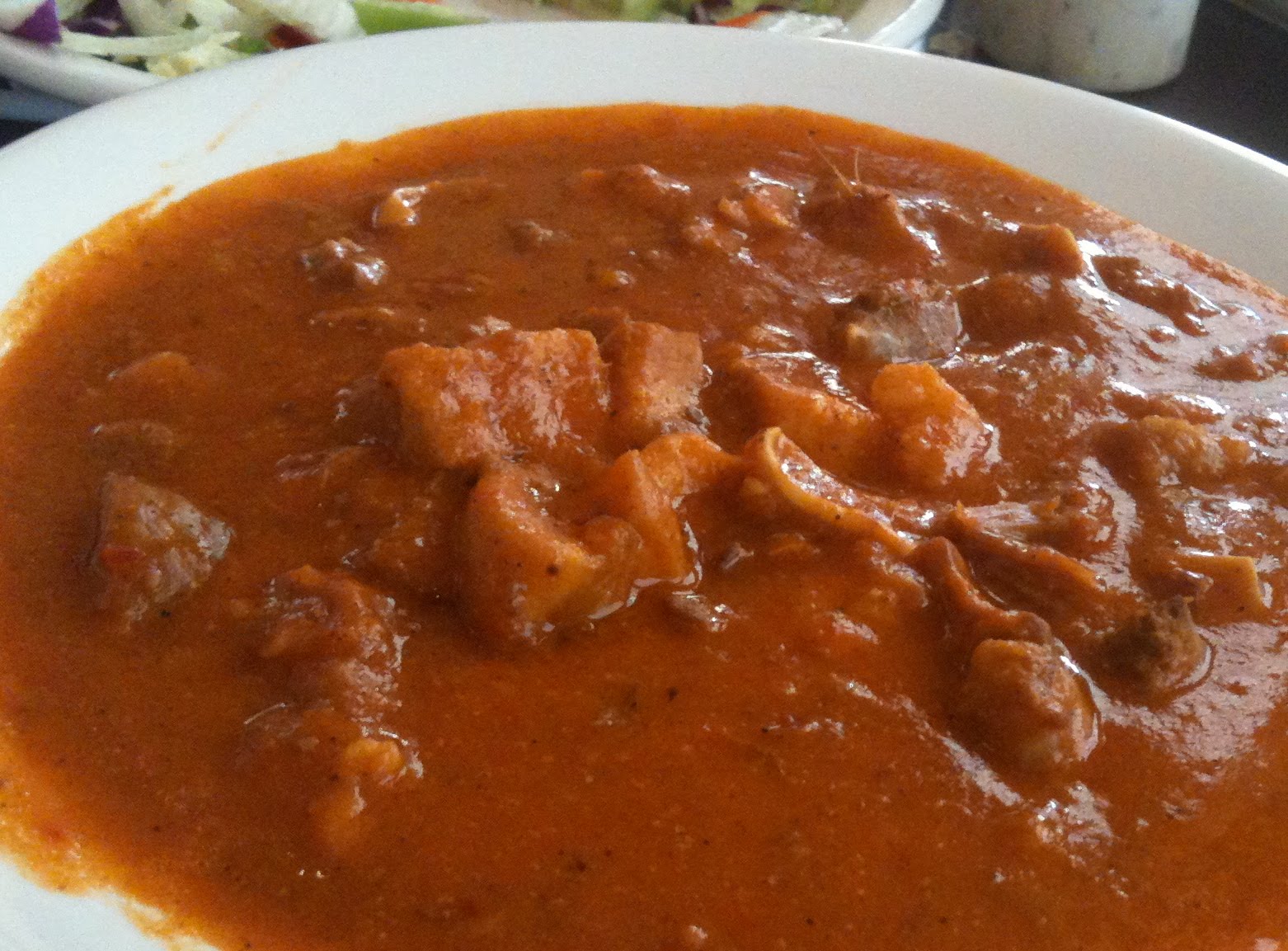
I ordered a generous bowl o' pig parts in a rich tomato broth, a.k.a. revolcado--crunchy ear, delicate heart and earthy liver. I know this isn't for most of you, and quite frankly, it's not really for me either. But I felt the need to try something that is considered an ordinary, everyday dish in Guatemala, where they eat a lot of innards and odd bits we don't usually find on the menu in the United States. After I got past the first cartilaginous ear, chomping on the rest of them was really rather fun (I know my dear friend Mark will roll his eyes when he reads this, since he has "texture issues" concerning foods.). But once you take your time and get acquainted with an unfamiliar texture, the squeamishness can dissipate at least a little. The soup itself was quite good, really rich, roundly seasoned and mildly spicy. The pieces of heart had fat attached, which, because it was pork, was good. Still, it would be nice to experience the texture of the heart itself without the added padding. Well, I'm glad for the experience. And glad it's behind me now.

While this isn't the most inspiring picture, I'm including it for two reasons: One: I've never had refried beans made of black beans. These were really good, much richer in flavor and more satisfying than those made with pintos. Two: Behold the bits of veggie in the rice. They actually used fresh vegetables, cut up and cooked that day, not the uniform-peas-and-carrots-from-a-can. I appreciate little touches like this. Usually I don't eat the rice that accompanies such meals, because all too often it's flavorless and flecked with tired vegetables that taste like aluminum. But this rice was made with broth rather than water and loaded with fresh veggies. We picked all the seafood out of Himself's bowl, so we carried home the rest of the seafood broth and stirred in the leftover rice for a great lunch the next day.

I'd be hard pressed to call a tortilla voluptuous, but these were thick and pliant--made with lard, of course. They reminded me of the exterior of a pupusa. One was all I needed to satisfy. And that means more to carry home and enjoy later with a grating of cheese and a little tomatillo salsa.

 We washed it all down with glasses of jamaica and horchata. You've seen pix of them on this blog before, but they're here again as a reminder that when you go out for Central or South American cuisine, you really should order a beverage that goes with it, not the default soft drink. It helps round out the authentic dining experience. Jamaica (pronounced hah-MY-kah, just in case you've never had it) is a sweetened drink made by boiling dried hibiscus blossoms (be sure to buy the ones specifically intended for consumption, otherwise you might end up with pesticide breath). And horchata is a lightly sweetened drink made from rice (it can also be made from almonds) and seasoned with cinnamon.
Dessert was wicked-good but put us both into a summer afternoon's coma shortly thereafter--and we shared this order! Rellenitos de platano are large fritters made of plantain with mole inside. They were incredibly rich without being overly sweet. Guatemala is a neighbor of Oaxaca, the region of Mexico that gave us mole. Turns out they have it in the country that is Mexico's "south of the border" too, which makes sense, since the entire Mesoamerican region is where the cocoa plant comes from.

No canned food. No canned music. The passion of people who love the cuisine of their home and are eager to share it. The opportunity to further explore the world's foods and see how the web of food and flavoring knits itself together around the globe. This is what I love about authentic restaurants. You just can't get this experience in a chain.

Thursday, August 19, 2010

52 Cuisines in 52 Weeks: 47 down, 5 TO GO!

Only five cuisines to go in my "52 Cuisines in 52 Weeks" blogging exercise.

Wowzers! It's hard to believe I'm almost finished with this challenge I gave myself almost a full year ago.

I told Himself today as we drove to the next dining adventure--Polish--that I'm not sure whether to be glad or sad about that. On one hand, at times it has been quite a real push to get these blog entries done, a considerable investment of time, money and effort. On the other, it has been a blast--a great way to learn about food and different cuisines and a great way to spend time with my friends, and with Himself, of course.

This won't be the end of it, though, when I pen--so to speak--and post cuisine #52. I'm considering continuing to post one new cuisine a month, while I'm busy blogging about other food and travel related things. And yes, I expect there to be a book to write at the end of it. After all, I've just conducted a year's worth of research.

But that's for a later blog entry. After a good--but rather heavy--Polish meal, I desperately need a nap.

Saturday, August 7, 2010

Week #47 Szechuan (Chinese)

In the past few years I've grown so fond of the myriad flavors that make up Thai, Vietnamese and Korean cuisines that I've more or less back burnered Chinese food. But Szechuan has restored my interest.

Szechuan province, in southwestern China, is a land of bold flavors and a variety of chili pepper that will clear your sinuses and cool you down on the hottest of days. "One dish, one shape, hundreds of dishes, hundreds of tastes" they say there, referring to their passion for balancing flavors, aromas, textures and colors. I'd say they're speaking my language, metaphorically at least.

A number of people have told us that the most authentic representation of Szechuan in the Los Angeles area is the food at Chung King in Monterey Park. It seems every food blogger in town has written about this place, but with all those endorsements, Himself and I knew this was where we had to go for the goods.

 The dominant color in this meal was RED, for all the peppers so liberally strewn over our dishes.
 And for the fire extinguisher mounted on the wall right next to our table (next to the thermometer). AND for the color of my face when I'd finished my chili-laden meal (see the last pic). This was definitely a waterproof mascara meal!

Himself ordered the fish slice hot pot, which contained slabs of a succulent white fish with mushrooms, bamboo shoots and slices of a taro root gelatin called konjaku. A healthy alternative to wheat noodles, konjaku is gluten free and loaded with fiber. And like a follow-the-leader kid on the playground, it absorbs whatever flavors are around it. I ladled some of that zingy broth over my white rice--the first time. For seconds on the rice, I retreated to the plain stuff to soothe my burning mouth and tingling lips.

I ordered the fried chicken cubes with green onions and sesame seeds, and of course, a ton of chili peppers. The chicken had plenty of heat without my gobbling up any of those bright red beauties. The chicken and chilis just being neighbors on the plate was enough for me to get a heat that was strong but that never overpowered the flavors of the dish.

Not every Szechuan dish is hot, so if you're a little shy about plunging into the peppers, you have options. This dish of rice crust with pork slices came in a mild broth that coated the mouth, to cool and refresh. We ordered a pot of white rice, too, so that helped calm things down. Balance is key to enjoying the hot stuff. By the way, this dish was good on its own, so if you have timid taste buds, you also have options.

Our big discovery: the lip-numbing quality of Szechuan food does not come from those hot peppers.  I always assumed that they were so hot that the sensory overload would finally drive your nerve endings to cry "uncle!" and numb out on you. But no, there's a completely different ingredient at work here: the Szechuan peppercorn, which is not actually a pepper or a chili at all. Szechuan peppercorns are aromatic and lemony--they come from a plant that's in the citrus family. But they hold a secret: this is where the lip numbing comes in--they contain a substance that causes a "general neurological confusion," to quote culinary science go-to guy Harold McGee. Beyond flavor, Szechuan peppercorns are added to help you deal with those fiery peppers by producing both numbness and a sort of sensory effervescence, kind of like when you drink a carbonated beverage while eating spicy food. (By the way, water is the last thing you want to drink while eating hot food, because it spreads the heat, rather than washing it away.) The outer husk is toasted, ground and added to dishes just before they're served.


With a face to match the pepper: devil's tongue, anyone?!

You actually do have some control over how much heat you get in a Szechuan meal. These hollowed out super-hot chilis are lavishly served over your order, and you control the amount of heat you consume by eating a few or a lot--or by picking out the meat and veggies and leaving the peppers behind. It's up to the individual diner. In spite of the heat, though, the flavors shine right through--ginger, garlic and Chinese five-spice, a blend of cinnamon, cloves, star anise, fennel seed and, ta-dah! Szechuan peppercorn.

My concern all along has been that the heat would completely wipe out the flavor and leave me a done-in pile of sweat, tears and pain. But I was wrong, and I'm champing at the bit for more. Szechuan rocks!

Tuesday, August 3, 2010

Week #46 Serbian

If you've never been to Serbia, do you actually know where it is--unless you're one of those oddballs like me who has a map fetish? Even I had to double check and see exactly where it fits in with the other Balkan States. It's part of the former Yugoslavia, one of those countries that we vaguely know is over there somewhere east of Italy. Or is that Slovenia? Or Croatia? Or the generously syllabled Bosnia-Herzegovina?

As difficult as it is for someone who's never been to Serbia to tell you just where it is, it's equally difficult to pin down exactly what makes Serbian food Serbian. So I asked my pal Tanja to join me for dinner. As a first generation American from Serbia, she's the truth meter I usually lack on these expeditions.
I just had to include this photo of Tanja holding a pic of her dad, a bodybuilder who was the first Mr. Yugoslavia in 1968. 
How cool is that?!

She suggested we go to Metro Cafe in Culver City. When I raised my eyebrows at the name and said it didn't sound terribly authentic, she assured me it had the goods. Then she rather sheepishly explained that Serbian food is more or less a pastiche of the cuisines of the neighboring countries, so there's a lot of Italian, Greek, Turkish and Hungarian on the menu. I assured her that that's fine, because food borders and political borders have little in common. Cuisine is geographically, climatically and culturally determined--no respecter of lines dictated by governments and drafted by mapmakers.

We did start off with a Serbian treat, because the first thing to hit our table was ajvar, known as "Serbian caviar." A spread of roasted red bell pepper, egg plant and chili peppers, it was richly textured, full flavored and mildly hot. Take a look at the spellings of these cousin words: ajvar and caviar. And neighboring Turkey's word for caviar is "havyar." See the etymological similarity? I imagine you could step into a kitchen next door and ask for one of these, and they'd know just what you were talking about. Well, that's enough of a foray into linguistic geekdom for one blog entry, but thanks for indulging me!

 Next was a basic Greek salad. At least you didn't see it in my last blog entry! This lightly dressed pile of tomatoes, lettuce, onions, cucumbers and feta was a nice fresh intermission in between the rich flavors of the other dishes.

 In spite of being completely landlocked, Serbia still manages to get its share of fresh seafood. These steamed mussels were dressed in a light sauce of tomato, garlic and parsley that made a nice soup for mopping up with that piece of charred bread on top.

My favorite dish was the pasulj, Serbian white bean soup. What made it a hit with me was that I detected the presence of smoked pork in it. You just can't go wrong with that. It was basic but hearty and nourishing, mildly seasoned, except for the garnish of cracked pepper. The door was propped open, with the ocean breezes whisking in, so even though it's August, there was a crispness to the air that made this soup even more welcome. Our server noted that the recipe comes from the chef's mum. Okay, in unison everybody say, "Awwww!!!"

The menu contains plenty of meat--they certainly don't shy away from it in veggie-happy LA. Our mutual friend, Vanessa, who is also of Serbian extraction, says the Serb table is all about meat, meat and more meat, "with the odd stew thrown in for digestive purposes." Well that's okay by me!
Chevapchichi is considered one of the national dishes of Serbia. These are beef sausages, but traditionally they were made of a combination of beef, pork and lamb. Still, these were really good, with a nice bit of char bestowed by the grill. They were served on a bed of sweet onions with some ajvar--which is an accompaniment as well as an appetizer--and fried potatoes that somehow managed to be more grease than potato. I don't mean this in a bad way. They were incredibly good!

Tanja shared a recipe for pasulj, the Serbian bean pot we'd had, from one of her family cookbooks. The funky measurements in it make me think it was converted from metrics to avoirdupois, which is what we use here in the U.S. (who uses .35 ounces of anything?) Between the odd measurements and some ingredients being listed with no measurements at all, I decided to do a little searching. I think I've managed to cobble together a recipe that is to the spirit of the original.

Homemade pasulj: I'll pick out the bay leaves and parsley stems before serving.

Serbian Bean Pot
("Pasulj")
Yields about 4 servings
Based on a recipe from Yugoslav Cookbook by Olga Novak Markovič (Cankarjeva založba, Ljubljana, 1986)

12 oz. white beans
Approximately 3 pints water
1 medium onion, finely chopped
1 medium carrot, finely chopped
parsley root (if you can’t find this, use a few parsley stems and chop the leaves for garnish)
2 cloves of garlic, minced
12 oz. smoked pork, cut into small bits if you use bacon
2 bay leaves
2 tablespoons tomato sauce
1 chili pepper (I used a Serrano), seeded, deveined and minced
salt and black pepper, to taste

Wash the beans well and soak overnight.

The next day, strain off the soaking water and add fresh cold water. Add to the bean pot all ingredients except salt and pepper, and simmer until beans and meat are tender.

***Remove the meat (if it’s a whole piece) and add a roux, made of 2 oz. fat (measured by volume) and 2 oz. flour (measured by weight). Simmer everything until thickened.

Season with salt and pepper when cooking is finished.

If you keep the pork whole, slice pieces of it and place one in each bowl and then ladle soup over it and garnish with chopped parsley.

***Now, about that roux: Some people panic as soon as they read a recipe and see they'll have to make a roux or even a liaison. So we're going to cheat. I'll teach you a little trick so you can get around it. Mind you, it will taste much better if you actually take the time and effort to make a roux, because the flavor and texture will both improve the final product. (And you have to promise me that someday you'll learn to make a proper roux, alrighty?) But for now, this is what we'll do: cook half of the beans in a separate pot and purée them before adding them to the main pot about a half hour before cooking is finished. The result will be a nice rich, thick potage.

Dessert is problematic. The Serbian dessert menu includes sweets that are emblematic of other countries: Greece's baklava; Hungary's dobos torte and Turkey's Turkish delight or ratluk, as they call it in Serbia.
Serbia has rice pudding too, but here they call it sutlijaš. And they top it with cinnamon and molasses, so I figured, why not? In the interest of portion control and not being a total glutton, I spooned the finished product into individual ramekins rather than one large bowl. And I stirred in the cinnamon while the rice cooked, so it would be well distributed. Himself and I test tasted two servings, one with molasses drizzled over it and the other with syrup. Hands down, the molasses was the winner in our household. But honey would be good, and I'm sure something rich like chestnut honey would be even better.

So, Serbian cuisine? As Tanja noted, when your homeland has been occupied by the Ottomans for a few hundred years and when it lies amongst an assortment of other countries with their varied cultures, it's easy to just absorb what's close at hand. But what Serbia has absorbed is, quite smartly, the good stuff. So if you find yourself wandering past a Serbian restaurant, stop in and have a bite. It will be good.

Wednesday, July 28, 2010

Week #45 Greek

Just between you and me and the gatepost--as my grandma used to say--I'm getting a little weary of trying to sort out the differences between Mediterranean and Middle Eastern cuisines. So much of it is so similar that when I ask, "What's the difference between your stuffed grape leaves and those of the country next door?" the inevitable response is, "Ours are better."

I yearned to do something a little different this time, so I headed out for groceries, not to the generic corner market but to Papa Cristo's on Pico at Normandie in Mid-City Los Angeles. This beloved LA institution is a Greek grocery, restaurant and catering company that keeps the city's Greeks--and Greek food lovers--supplied with plenty of imported and authentically prepared food.

Here's my haul, which I used to make dinner, with plenty of items I can use for quite some time--a good olive oil, some seasonings to which only Papa Cristo himself knows the formula and a nice bag of Greek sage that's still on its woody stems. And masticha, which we'll get to in a little bit.

What I didn't want to do was make what shows up on every Greek menu--or what people typically think of when they ponder Greek food. So no hummus, no baba ganoush, no baklava.

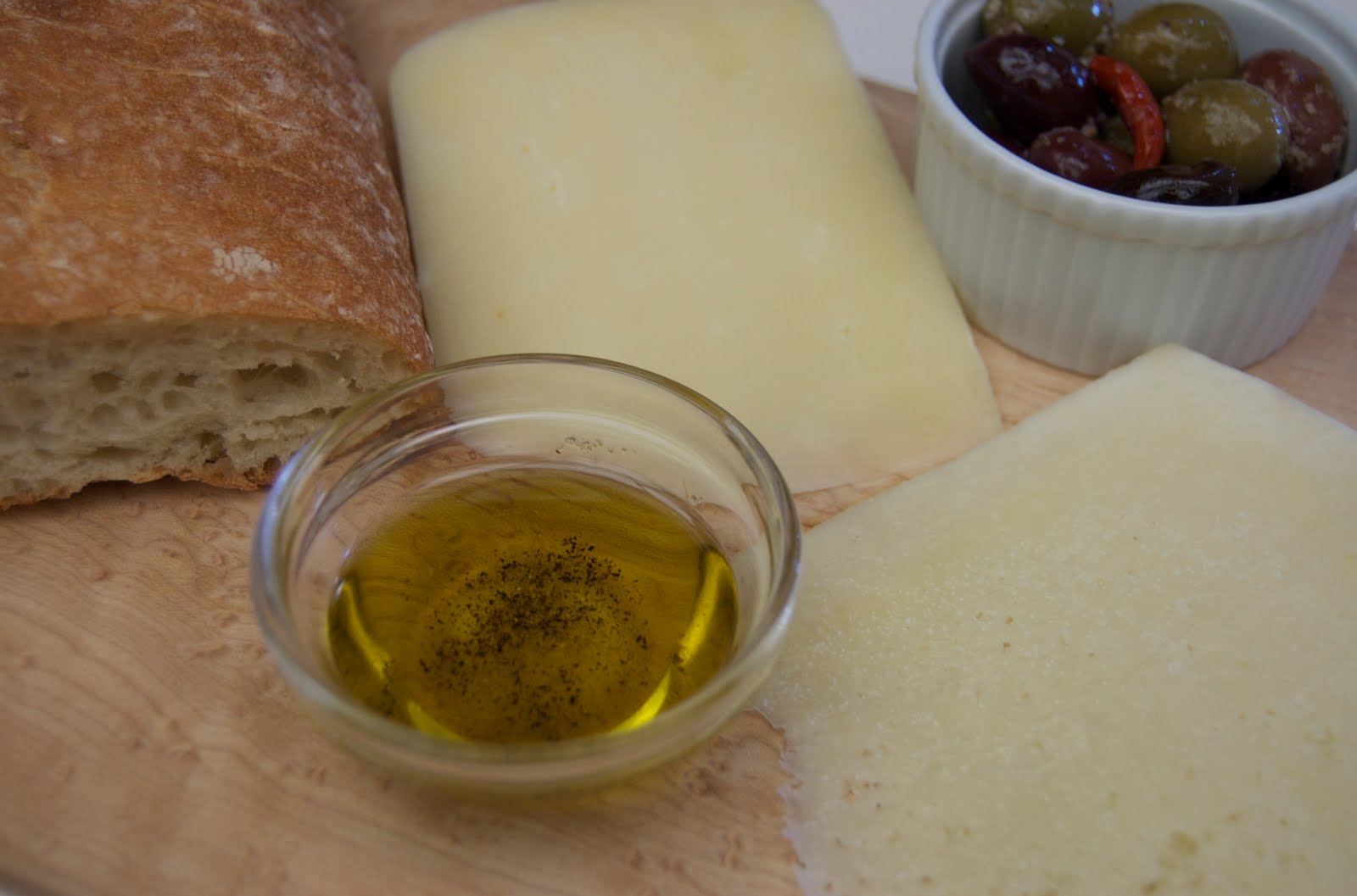
Instead of feta, which is what usually comes to mind when you think of Greek cheese, I selected wedges of a couple of completely different cheeses to go with the rustic bread that's made on-site. The cheese in the center is kaseri, a sheep's milk cheese with a little goat's milk thrown in for good measure. It has an herbal quality to it that I suppose is the result of grazing livestock in a scrubby landscape filled with rosemary, thyme and oregano. Its slight chewiness reminds me a bit of provolone. The cheese in the lower right is kefalotiri, a tart, saltier and slightly drier cheese made from sheep's milk. Having been around since Byzantine times, this is a cheese with some history. By the way, its name comes from the Greek hat called a kefalo. Now whenever I see one those hats, my wacky mind's eye is sure to envision someone wearing a round of cheese on his head.

Okay, so the canned beans seem like a cheat, but they're Greek gigantes, the largest lima beans you'll ever find. One glance and I'd swear they were actually fava beans, but they taste like neither limas nor favas. They have a mild flavor and with a slightly dry texture to them--in spite of their tenure in the can of sauce--so the mildly spicy red sauce was a good addition. I cooked up some of the couscous-type sour frumenty Greek pasta. It's made of durum wheat and has a robust sourdough flavor. Then I started layering: I spooned the hot pasta and beans over a bed of chard and let it wilt, then drizzled the dish with the olive oil and a little red wine vinegar (not too much, since the pasta is naturally sour) and sprinkled on one of Papa Cristo's spice blends. Served with bread and olives, it was a satisfying main course. With it we had glasses of retsina. This Greek white wine is famously pine-tasting, crisp and dry, but full of flavor.

I love love love leeks. But right up there on the list with turnips and rutabagas, they must be one of the world's most under-appreciated vegetables. While the traditional Greek way to have them is simmered, drained and then drizzled with olive oil and vinegar, I decided to instead top these with avgholemono sauce made of eggs, lemon juice and some of the leek broth (chicken broth is more traditional). While the leeks were simmering I tossed in a branch of the Greek sage to zazz up their mild butteriness with a little woody-herbally flavor.

I also picked up a can of calamari, a.k.a. squid, since I can't find the fresh stuff at our much more generic local grocery stores. These tiny little guys were packed in brine and still raw, so I gave them two minutes in a pot of boiling water with a couple of lemon halves tossed in. I've never cooked squid, and what I found on the subject said to cook it either two minutes or 30 minutes, explaining that if you go past two minutes they become tough, and then it takes a good half hour to tender them up again. Two minutes was perfect--they were delicate and not at all rubbery, which is my usual complaint with calamari. I detest eating what feels to my mouth like a basket of deep-fried rubber bands!

I made up a bit of ladolemono to dip them in. This intensely lemony dressing is a popular accompaniment in Greece to all sorts of seafood. It's a great addition to your stash of quick fix-ups--just whisk together a couple of tablespoons of fresh lemon juice, a half tablespoon of Dijon mustard and a quarter cup of olive oil, and season it with salt and black pepper to taste. This sauce has some serious pucker power, so cheat if you need to, by adding just a smidge of sugar while you're whisking to make the sauce a little less aggressive.

Here's the body of one of the calamari. Larger ones can be stuffed with a mixture of something wonderful and then breaded and lightly fried. I'd say this size would be perfect for piping in a mixture, just like you would with a squash blossom. Just pull out that cartilaginous spine first (don't worry about the other bits inside--they're edible). I guess this is an experiment to reserve for another day.

The baklava in Papa Cristo's pastry case called long and loud, but I opted for these crumbly cookies laced with chopped nuts. I had them with some ouzo, which is the color of water when you pour it into the glass but turns milky when you add water to it. Ouzo is an aperitive, meaning you're supposed to have it before dinner, to get the digestive juices flowing in preparation for the meal. But I've jumbled up everything else in this meal, so why not have the aperitive at the end? It still aids digestion.

 Leftovers: For lunch the following day, I varied things a bit and had the remaining ingredients as a cold salad: a bed of chard, then the pasta and beans, with the rest of the calamari cut up on top and a bit of the kefalotiri grated over it and drizzled with just a touch of the ladolemono. I didn't mind having this two days in a row. It's a good way to get a lot of flavor and variety in one dish--and to use up leftover bits that are too few to make much of a meal on. A handful of those huge beans, a couple of calamari and a few gratings of cheese, combined to provide all the protein I needed for one meal.

 Snack time: People love their "spoon sweets" in Greece, and masticha is a favorite. Growing only on the southern part of the island of Chios, the evergreen mastica tree produces a pleasantly resinous tasting sap that is used to flavor this yummy paste. Get a spoonful of this white taffy-like substance and dip it into a glass of water to make a "lollipop" of it, called a "submarine." It's a great treat on a hot day. While masticha looks like it might be employed in some other way in the kitchen, this is the only way I've ever heard of anyone eating it. Hmmm, looks like an ingredient that's just begging to be experimented with, doesn't it?

For breakfast the following morning we toasted some of the leftover rustic bread and enjoyed it with the cheeses and some rose petal preserves. I was still swooning from the rosewater ice cream I'd had during my Persian adventure the previous week, so a rose petal strewn breakfast made me quite happy.
For future reference, rose petal preserves are quite liquidy and don't work well on rustic bread with its large crumb (that's baker talk for holes in the bread created during the rising process). It leaks through and you have to lick it off your plate. It's also difficult to photograph as it seeps through, so I'll just have to document it this way, with those luscious petals sliding off the spoon.

Yeah this is Greek-lite, I know. But it was fun poking around in the market, reading labels and becoming overwhelmed by the variety of food available. When you're dealing with a cuisine that is several thousand years in the making, your choices are practically unlimited.